Wrist Clasp (Left)
Hannah Rosenberg
Known Context
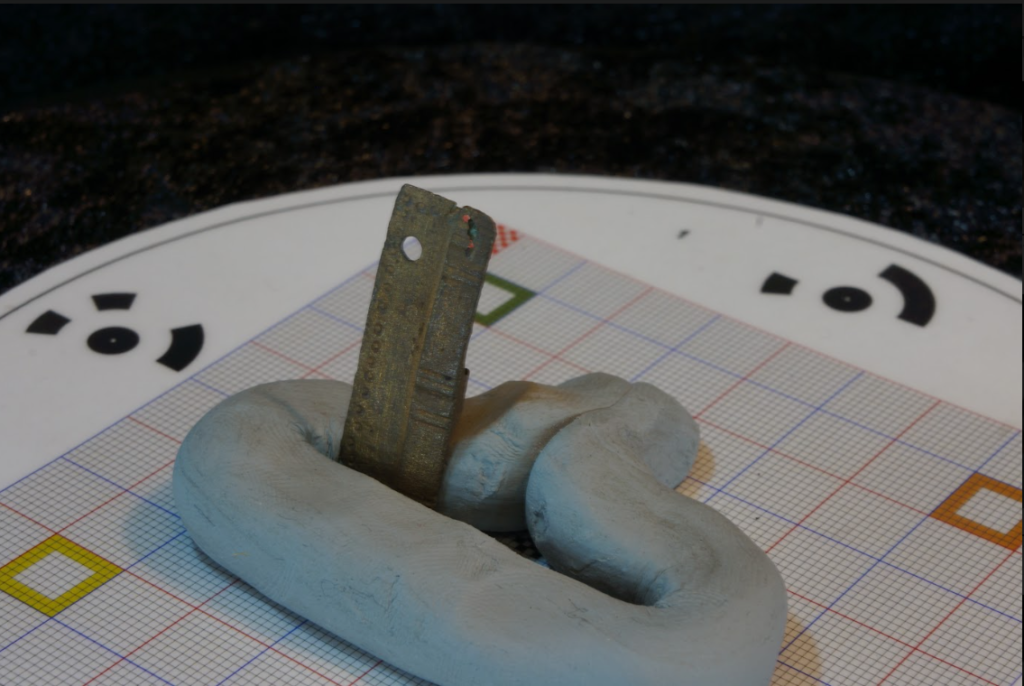
The left wrist clasp was found at West Stow in grave 28 of an Anglo-Saxon noblewoman. Discovered in its set with the right clasp, the left wrist clasp was in relatively good condition, with the decorations and hook visible. The wrist clasps were found among a few other goods, including brooches, girdle hangers, a beaded necklace, and an ivory ring.
Brief Background
The wrist clasp was worn by Anglo-Saxon noblewomen, used both functionally to secure their sleeves and symbolically to denote their status. Typically made of iron or bronze from metal sheet or casting, the wrist clasp dates back to the late 5th or 6th century. Originating from Scandinavian designs, the clasp was small with a plate and bar, two sewing holes, and some decoration. Found in the eastern region of England, wrist clasps provide important insights into both geopolitical boundaries and gender practices of Anglo-Saxon society. The limited written history of the time describes territorial borders that are crossed and blurred by the discovery of wrist clasps in various gravesites. Although originally worn by both men and women, the wrist clasps’ appearance in exclusively women’s graves reveals the shift in gender norms and the high mobility of Anglo-Saxon women.
Reconstruction Process
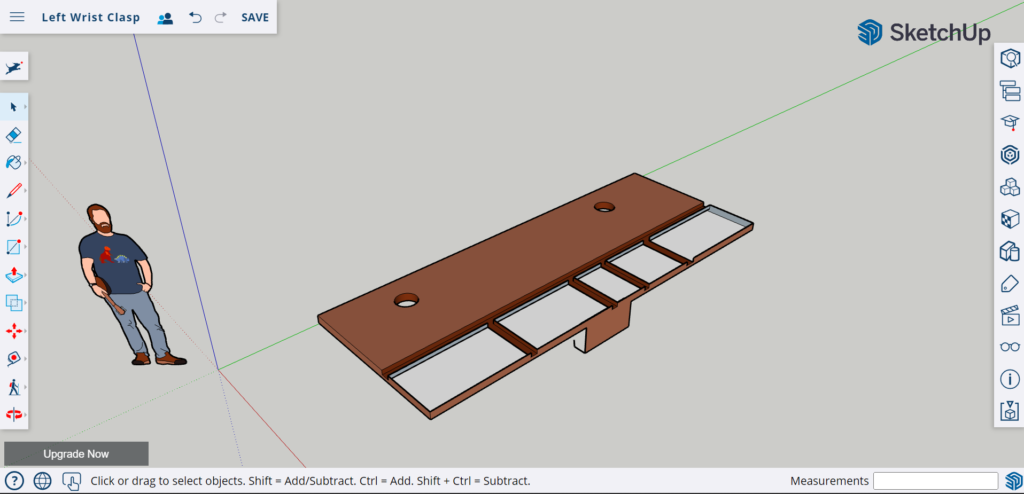
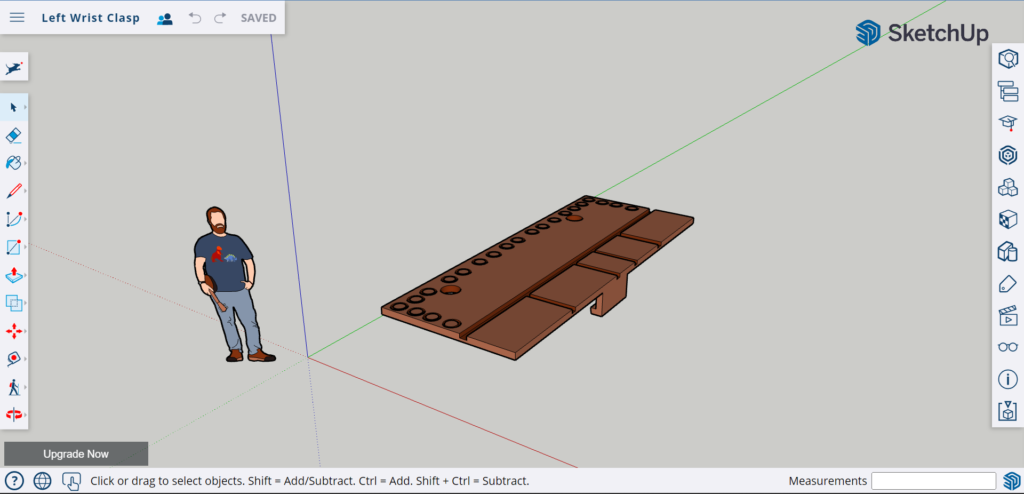
I chose to recreate an online model of the left wrist clasp using the free program SketchUp. I had some difficulty working with the mechanics of the software and the limited options for design, texture, and color, but the end result turned out pretty well. I aimed for a model that was relatively similar in shape and color, and added my own decoration that closely resembled the clasp from West Stow.

Insights
Even though I was working with a different medium, the recreation process still provided insight on the artistry of the wrist clasp. It also made me think much more about how the look and the form of the object would have affected the woman wearing it, meaning that the original construction would have required much consideration into materials, weight, shape, and design.
Links for Further Reading
